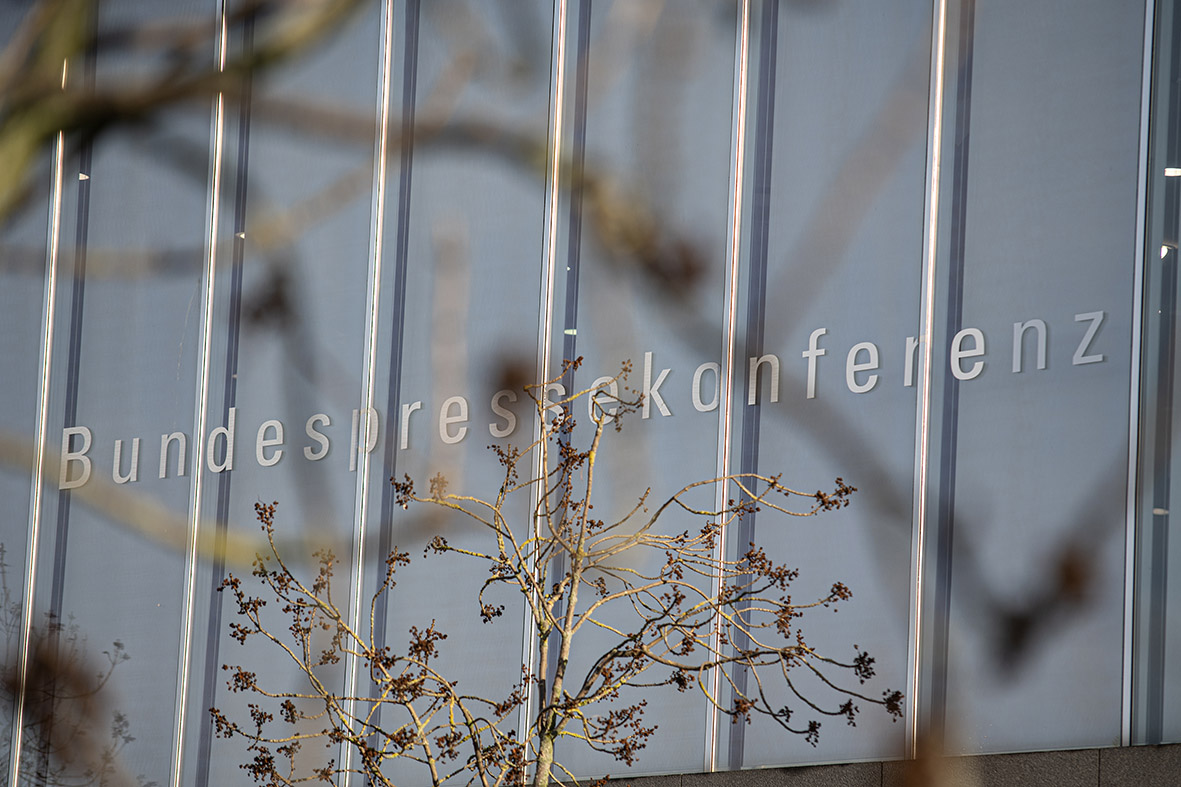
The event offered an insight into the current research findings of the National Discrimination and Racism Monitor (NaDiRa) and opened up an exchange between academia and the media.
Press conference on the monitoring report with a focus on "Habitually unequal: racism and housing conditions"
The report focused on the question of how and to what extent racially marked people - including Black, Muslim, Asian and Eastern European groups - are affected by inequalities in the housing market, both in terms of access to housing and their experiences in their living environment and neighborhood.
At the beginning of the event, Prof. Dr. Frank Kalter, Director of the DeZIM Institute, presented the foundation, structure and scientific-political significance of the National Discrimination and Racism Monitor. Tae Jun Kim, head of the NaDiRa panel and co-author of the report, then presented the key findings of the study.
This was followed by a moderated Q&A session in which journalists from various media had the opportunity to ask the speakers questions. The event was moderated by Angie Pohlers, press officer at the DeZIM Institute.
"The NaDiRa's general research approach is based on a broad understanding of racism, as is common in international research. This means, among other things, that racism is not only expressed overtly, but also covertly and subtly. And that it not only manifests itself in individual attitudes or actions, but also in institutional and structural contexts. This means that certain groups are systematically and sustainably disadvantaged, sometimes in very complex ways."
Program
- 10:00 - 10:05 a.m. - Welcome by Angie Pohlers, Press Officer of the DeZIM Institute
- 10:05 - 10:10 a.m. - Introduction to the study by Prof. Dr. Frank Kalter, Director of the DeZIM Institute
- 10:10 - 10:30 - Presentation of the results by Tae Jun Kim, head of the NaDiRa.panel and co-author of the report
- 10:30 - 11:00 a.m. - Q&A session
Housing is a basic need. It provides protection, stability and social participation. And yet, housing is not only scarce in Germany, it is also unevenly distributed.
This is precisely where the new NaDiRa monitoring report comes in. It shows that evidence of racial discrimination can be found right across the housing context - from access to the housing market to housing conditions and life in the neighborhood.
The Q&A session focused, among other things, on the recommendations for action that were derived, which, as the researchers explained, are based on empirical findings and are aimed at four levels: the national, state and municipal levels as well as the key players in the housing market. In particular, Dr. Cihan Sinanoğlu, Head of NaDiRas and Scientific Director of the DeZIM Institute, and Dr. Noa K. Ha emphasized the need for a reform of the AGG and a critical review of the exemptions under Section 19 (1), (3) and (5) AGG with regard to their application practice and potential for discrimination.
When asked by the journalists present whether the low figures were surprising, the researchers referred to the cumulative effect of discrimination. This has an effect in housing across several application steps (feedback, invitation, receipt of the property) and levels (rent, ownership, defects) of the housing market - and is also recognizable in other areas of life such as health. For this reason, it remains relevant to understand the subjective and objective results of this report in their interaction in order to obtain a complete picture.